
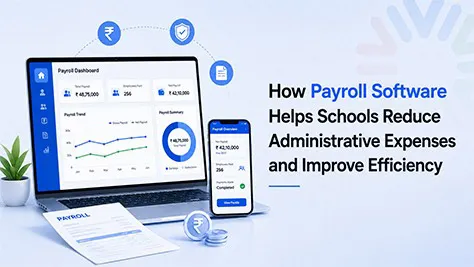
Payroll Management Software helps schools reduce administrative expenses by automating salary calculations, attendance and leave adjustments, deductions, payslip generation, employee records, and payroll reporting.
Managing employee salaries is one of the most important financial responsibilities of any educational institution. Every month, schools need to calculate salaries, consider attendance and leave, process deductions, generate payslips, and maintain accurate employee records.
When these activities are handled manually, they can consume considerable administrative time and create opportunities for calculation errors. With the help of modern Payroll Management Software, schools can automate several payroll-related processes, reduce repetitive work, and improve the overall efficiency of their administration.
What Is Payroll Management Software for Schools?
Payroll Management Software is a digital solution that helps educational institutions manage employee salary and payroll-related activities from a centralized platform.
Instead of depending on spreadsheets, paper records, and manual calculations, schools can use software to manage important payroll functions such as:
- Employee salary calculations
- Attendance and leave-based salary processing
- Deductions and allowances
- Tax-related calculations
- Payslip generation
- Employee payroll records
- Payroll reports and financial insights
By bringing these activities together in one system, schools can improve accuracy and reduce the time spent on repetitive payroll administration.
Why Manual Payroll Processing Can Become Difficult
Payroll management may appear to be a routine activity, but it involves several interconnected calculations and employee records. As the number of teachers and staff increases, managing payroll manually becomes more challenging.
Schools may experience problems such as:
- Repetitive salary calculations
- Errors in attendance or leave adjustments
- Incorrect deductions
- Delays in salary processing
- Excessive paperwork
- Difficulty maintaining employee records
- Additional administrative workload
Even a small mistake in payroll can lead to confusion, employee dissatisfaction, and additional time spent correcting records.
How Payroll Automation Helps Schools Reduce Administrative Costs
Payroll software can help schools reduce expenses not only by automating calculations but also by improving the overall use of administrative resources.
1. Reduces Time Spent on Repetitive Work
Salary calculations, attendance adjustments, deductions, and payslip preparation can take considerable time when performed manually.
Payroll automation handles many of these repetitive activities through predefined processes. This allows administrative staff to spend less time on routine calculations and more time on important institutional responsibilities.
2. Minimizes Costly Payroll Mistakes
Manual payroll processing increases the possibility of errors. Mistakes in salary calculations, deductions, or attendance records can lead to repeated work and financial discrepancies.
A digital payroll system can process calculations using stored employee information and predefined rules, helping reduce avoidable human errors and improving salary accuracy.
3. Reduces Paper and Documentation Expenses
Traditional payroll management often involves printed salary records, employee documents, files, and physical storage.
With a digital system, payroll records can be stored electronically. This helps reduce printing and paperwork requirements while making important information easier to find whenever it is needed.
4. Speeds Up Monthly Salary Processing
Preparing payroll manually can take several days, especially in schools with a large number of employees.
Automated payroll software can process employee salary data more efficiently. This helps schools complete monthly payroll activities faster and reduces the number of administrative hours required for salary processing.
5. Helps Manage Deductions and Compliance More Efficiently
Payroll involves more than simply calculating basic salaries. Schools may also need to manage deductions, taxes, allowances, and other statutory requirements.
A structured payroll system can help organize these calculations and reduce the risk of overlooking important payroll-related requirements.
The Connection Between Payroll Software and School Financial Management
Employee salaries are often one of the largest recurring expenses for an educational institution. For this reason, accurate payroll information is essential for effective financial planning
A School Payroll Management System can help school administrators gain better visibility into:
- Total salary expenses
- Department-wise payroll costs
- Employee compensation details
- Monthly payroll trends
- Deductions and allowances
- Payroll-related financial reports
This information can support better budgeting and help school management make more informed financial decisions.
What Happens When Schools Continue Using Manual Payroll Systems?
Schools that rely entirely on traditional payroll methods may face increasing challenges as their workforce grows.
Common difficulties include:
- More time spent on monthly salary preparation
- Higher risk of calculation errors
- Delays in processing salaries
- Difficulty tracking employee payroll information
- Increased paperwork
- Limited visibility into salary expenses
- Additional work required to correct mistakes
These challenges can place unnecessary pressure on administrative teams and affect the efficiency of overall school operations.
How Schools Can Improve Payroll Efficiency
A successful transition to digital payroll management begins with identifying the school’s current challenges. Schools should evaluate their employee records, salary processes, attendance systems, and reporting requirements.
A suitable payroll solution can then help connect these activities and create a more organized workflow.
When payroll, attendance, employee information, and financial reporting work together, schools can reduce duplication and improve the accuracy of their administrative operations.
Can Payroll Automation Really Reduce Administrative Costs by 40%?
The actual savings may vary depending on the size of the institution, existing payroll processes, number of employees, and level of manual work involved.
However, schools that automate time-consuming payroll activities can significantly reduce the administrative effort required for salary processing. The savings can come from:
- Reduced manual working hours
- Fewer payroll errors
- Lower paperwork requirements
- Faster processing
- Better use of administrative staff time
- Improved financial control
For some institutions, these combined efficiencies can result in substantial reductions in administrative expenses.
Conclusion
Payroll management is an essential part of school administration, but manual salary processing can consume valuable time and create unnecessary operational challenges.
Payroll Management Software helps schools automate salary calculations, manage employee records, process attendance and leave information, generate reports, and improve the accuracy of payroll operations.
By reducing repetitive work, minimizing errors, lowering paperwork, and improving financial visibility, payroll automation can help educational institutions operate more efficiently and control administrative expenses.
For schools looking to modernize their administrative processes, implementing a reliable School Payroll Management System can be an important step toward creating a faster, more accurate, and cost-effective payroll workflow.
Frequently Asked Questions
1. What is the main purpose of payroll software in schools?
Payroll software helps schools manage employee salary calculations, attendance-based adjustments, deductions, payslips, employee records, and payroll reports through a digital system.
2. Can payroll software reduce school administration costs?
Yes. By automating repetitive work, reducing paperwork, minimizing errors, and saving administrative time, payroll software can help reduce operational expenses.
3. Does payroll software integrate with attendance and leave management?
Many modern payroll systems can connect payroll calculations with attendance and leave information. This helps ensure that salary processing is based on accurate employee records.
4. How does payroll automation reduce errors?
Automated systems use predefined salary structures and employee data to perform calculations, reducing the risk of common manual mistakes in salaries, deductions, and attendance adjustments.
5. Is payroll software suitable for smaller schools?
Yes. Payroll software can be useful for institutions of different sizes. Smaller schools can also benefit from reduced manual work, better records, and more efficient salary processing.