
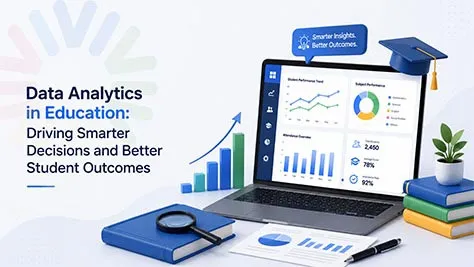
Modern schools generate large amounts of academic and administrative data every day. Without the right tools, managing this information can be challenging. Data Analytics in Education helps schools transform raw data into meaningful insights, enabling informed decisions, improved academic performance, and efficient school management.
What is Data Analytics in Education?
Data Analytics in Education involves collecting, analyzing, and interpreting school data to improve teaching, student performance, and administrative processes. It helps institutions make data-driven decisions instead of relying solely on manual reports or assumptions.
Benefits of Data Analytics for Schools
Monitor Student Performance
Schools can track academic progress, attendance, and assessment results to identify students who need additional support.
Improve Learning Outcomes
By analyzing performance trends, teachers can personalize teaching methods and address learning gaps more effectively.
Enhance Administrative Efficiency
Data analytics simplifies tasks such as attendance tracking, reporting, scheduling, and resource management, reducing manual effort.
Enable Predictive Insights
Schools can use historical data to identify attendance issues, academic risks, and resource requirements before they become major challenges.
Support Better Decision-Making
Real-time reports and dashboards help school leaders make informed decisions regarding academics, staff performance, and overall school operations.
Why Schools Should Adopt Data Analytics
A data-driven approach helps educational institutions:
- Improve student performance
- Increase operational efficiency
- Reduce manual reporting
- Track school performance metrics
- Support personalized learning
- Strengthen academic planning
Choosing the Right School Performance Management Software
When selecting a solution, schools should look for features such as:
- Real-time dashboards
- Student performance tracking
- Attendance analytics
- Learning outcome analysis
- Automated reports
- School ERP integration
- Secure cloud-based access
Conclusion
Data Analytics in Education enables schools to make smarter decisions by converting everyday data into actionable insights. With the help of School Performance Management Software, institutions can monitor student progress, improve learning outcomes, streamline administration, and plan more effectively.
As education continues to become increasingly data-driven, adopting analytics solutions can help schools enhance academic excellence while improving overall operational efficiency.
Frequently Asked Questions
1. What is Data Analytics in Education?
It is the process of collecting and analyzing educational data to improve decision-making, teaching, and student performance.
2. How does data analytics improve student outcomes?
It helps identify learning gaps early, monitor academic progress, and support personalized teaching strategies.
3. What are school performance metrics?
These are measurable indicators such as attendance, examination results, student progress, and teacher performance used to evaluate school effectiveness.
4. Can data analytics improve school administration?
Yes. It automates reporting, simplifies administrative tasks, and provides real-time insights for better management.
5. Why should schools invest in School Performance Management Software?
It helps institutions improve efficiency, monitor performance, generate accurate reports, and make informed, data-driven decisions.