
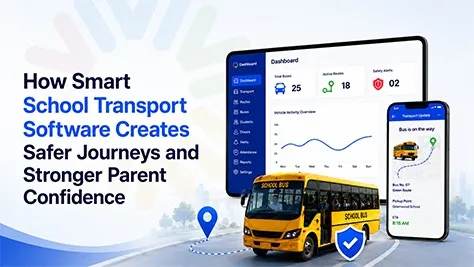
School transportation is much more than simply moving students from home to school and back. Every day, schools need to coordinate vehicles, drivers, routes, pickup points, student details, and communication with parents. When these activities are handled using registers, spreadsheets, phone calls, or manual processes, managing transportation can quickly become complicated.
As schools grow and the number of students and buses increases, having a digital School Transport Management System can make a significant difference. Modern transportation software gives schools better visibility over daily bus operations, supports improved safety practices, and keeps parents informed throughout their child’s journey.
What Is a School Transportation Management System?
A School Transportation Management System is a digital platform that helps schools manage and monitor their complete transportation operations from a centralized system.
Depending on the solution, it can help schools manage:
- School bus and vehicle information
- Driver and transport staff details
- Bus routes and pickup points
- Student transport assignments
- Bus tracking and movement updates
- Pickup and drop-off records
- Parent alerts and notifications
- Transport reports and operational data
Instead of maintaining transportation information across multiple files and registers, schools can organize important data in one place and manage their transport operations more efficiently.
Why Is Digital Transport Management Important for Schools?
Traditional transport management can become difficult when schools operate multiple buses and serve a large number of students. Manual processes may lead to delays, information gaps, and difficulty in quickly accessing important transport details.
A digital transportation solution helps schools:
- Organize transport activities more efficiently
- Reduce repetitive administrative work
- Maintain accurate student and vehicle information
- Improve communication with parents
- Monitor transportation activities more effectively
- Make better decisions using organized transport data
This makes the daily transportation process more structured and easier to manage.
How Technology Can Improve Student Transportation Safety
Student safety is one of the most important responsibilities associated with school transportation. A modern School Bus Management System provides schools with better visibility and control over different aspects of the student journey.
Real-Time Bus Visibility
With GPS-enabled tracking, administrators can monitor the movement of school buses while they are on the road. This allows the school transport team to understand the current location of a vehicle and identify unexpected delays or route-related issues more quickly.
Better Pickup and Drop-Off Monitoring
Digital transport systems can help schools maintain organized information about student pickup and drop-off points. This creates a clearer record of transportation activity and helps reduce confusion during daily journeys.
Organized Driver and Vehicle Records
Important details related to buses, drivers, routes, and vehicle maintenance can be maintained digitally. Having this information available through a centralized platform makes it easier for school administrators to manage transportation responsibilities.
Faster Communication During Unexpected Situations
Traffic congestion, route changes, delays, or emergencies may occasionally affect school transportation. With digital communication tools, schools can share important updates with parents and relevant staff more quickly.
Major Benefits of School Transport Management Software
1. Smarter Route Planning
Digital route management helps schools organize pickup and drop-off points more effectively. Better planning can help reduce unnecessary travel, improve route efficiency, and make daily transportation more organized.
2. Improved Operational Efficiency
Automating transport-related tasks reduces the amount of time staff need to spend on manual records and repetitive administrative work. This allows school teams to focus more on monitoring and managing transportation services.
3. Better Communication With Parents
Parents can receive important transport updates, such as bus movement information, delays, or other relevant notifications. Regular and timely communication helps reduce uncertainty during a child’s daily commute.
4. Centralized Transport Information
Schools can manage student assignments, vehicle details, driver information, route data, and reports through a single platform. This makes information easier to access and reduces dependence on scattered manual records.
5. More Organized Transportation Records
Digital records help schools maintain better visibility into their transportation operations. Reports can support administrators in reviewing transport activities and identifying areas that require improvement.
How Bus Tracking Technology Helps Build Parent Trust
Parents want to know that their children are travelling safely and that the school has proper control over its transportation operations. One of the biggest advantages of digital bus tracking is improved visibility.
With the right system, parents may be able to receive information such as:
- The current location of the school bus
- Expected arrival information
- Bus departure notifications
- Updates about delays or route changes
- Important transportation alerts
This level of communication can reduce uncertainty for parents. Instead of repeatedly calling the school office to ask about a bus, they can receive relevant updates through the available communication system.
When schools provide timely and transparent transport information, parents are more likely to feel confident about the institution’s transportation arrangements.
Problems Schools May Face Without Digital Transport Technology
Schools that depend completely on manual transportation processes may experience several challenges, including:
- Difficulty managing multiple routes
- Limited visibility of bus movement
- Delays in communicating important information
- Increased administrative workload
- Scattered or outdated transport records
- Difficulty coordinating drivers, buses, and students
- Increased uncertainty for parents
As the size of a school’s transportation network increases, these challenges can become more difficult to manage. Digital tools can help schools bring greater structure and visibility to their transport operations.
Conclusion
Managing school transportation effectively requires careful coordination, accurate information, and clear communication. As schools continue to expand their transportation operations, manual methods may not always provide the visibility and efficiency required for modern school management.
A School Transportation Management System can help institutions organize routes, manage student transport details, monitor bus operations, maintain records, and communicate important updates more efficiently. Most importantly, it can support schools in creating a more transparent and organized transportation experience for students and parents.
By adopting the right digital solution, schools can reduce administrative challenges, improve transport coordination, and strengthen parent confidence in their student transportation services.
Frequently Asked Questions
1. What does School Transport Management Software do?
School Transport Management Software helps schools manage transportation-related activities such as routes, buses, drivers, student assignments, tracking, notifications, and transport records from a centralized digital platform.
2. How can technology support student transport safety?
Technology helps schools improve visibility over buses, routes, drivers, and student transportation records. Features such as tracking and digital notifications can help administrators respond more efficiently to delays and unexpected situations.
3. Can parents receive school bus updates?
Yes. Depending on the software, parents may receive updates related to bus movement, expected arrival times, delays, route changes, and other transportation-related information.
4. How does transport software reduce administrative work?
It can automate and organize tasks such as student transport allocation, route management, record maintenance, reporting, and communication. This reduces the need for repetitive manual work.
5. Is transportation software suitable for small schools?
Yes. Transportation software can be useful for schools of different sizes. A school can use the features that match its fleet size, student strength, routes, and transportation requirements.
6. How does bus tracking improve parent communication?
Bus tracking provides better visibility into transportation activity. When parents receive timely updates about bus movement or delays, they have better information about their child’s daily commute.
7. What should schools look for in transport management software?
Schools should consider features such as route management, student allocation, vehicle and driver records, GPS tracking, parent communication, reporting, ease of use, and integration with other school management functions.
8. How can a school start using a digital transport management system?
Schools can begin by reviewing their current transportation challenges and identifying the features they require. A product demonstration can help administrators understand how a transport management platform can fit into their daily operations.